
By Shawn Zigelstein, Broker, Team Zold
Observatory is the most property-type-split market in Richmond Hill. In Q1 2026, 12 of the 31 sales were condo apartments, averaging about $574,000, and 9 were detached homes, averaging roughly $2.19 million. The average price in Q1 2026 was $1,179,995. The median was $768,000. That's a $412,000 gap between the two.
So the "average" of $1.18 million describes almost no actual home you can buy. The median of $768,000 is much closer to what most buyers are actually transacting at, since condos and condo townhouses accounted for well over half of the quarter's volume. Anyone quoting "the average price in Observatory" without splitting by property type is giving you a number that doesn't reflect the ground reality.
For a broader look at how Observatory compares to the rest of the city, take a look at our Richmond Hill Neighbourhoods Guide.
Where is the Observatory Neighbourhood in Richmond Hill?
The Observatory neighbourhood sits in central Richmond Hill, roughly bounded by Major Mackenzie Drive to the north, 16th Avenue to the south, Bayview Avenue to the east, and the Yonge Street corridor and the CN Bala rail line to the west. It's named for the David Dunlap Observatory, which anchors the neighbourhood and gives it both its name and its character.
That observatory matters more than a name. The David Dunlap Observatory property is a 189-acre site that once held the largest optical telescope in Canada.
The City of Richmond Hill now owns most of it. David Dunlap Observatory Park is the largest green space in the area, a wide band of protected conservation land and forest in the middle of an otherwise densely built neighbourhood.
The Royal Astronomical Society still runs public astronomy nights at the telescope. So you have a working piece of scientific history and a major park, both permanent and right in the centre of where people live.
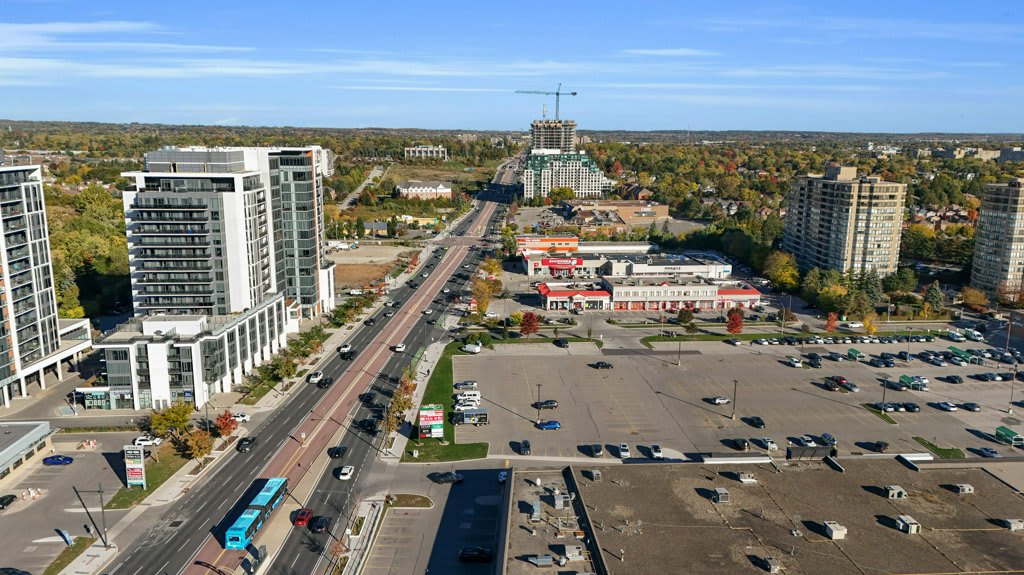
The location also brings together two very different worlds within a single set of boundaries. The Yonge Street edge on the west is a transit-served, increasingly condo-heavy corridor. The interior and eastern side toward Bayview are established detached streets and custom infill, with the brand-new Observatory Hill enclave going up next to the park. That split geography explains why the data is split the way it is.
Current Market Trends in Observatory, Richmond Hill
Q1 2026 gave Observatory 31 sales against 76 new listings and 33 active listings, at a 97% sale-to-list ratio and 29 days on market. Those headline numbers look healthy and unremarkable. The story is entirely in the breakdown.
Observatory Market Snapshot — Q1 2026
| Metric | Q1 2026 |
|---|---|
| Sales | 31 |
| Average Price | $1,179,995 |
| Median Price | $768,000 |
| New Listings | 76 |
| Active Listings | 33 |
| Sale-to-List Ratio | 97% |
| Avg Days on Market | 29 |
| Dollar Volume | $36,579,832 |
Source: TRREB Richmond Hill Community Market Report, Q1 2026.
Now here's where the average comes apart. The same quarter, broken out by property type:
Observatory Property Type Breakdown — Q1 2026
| Property Type | Sales | Avg Price | Median Price | SP/LP | DOM | SNLR |
|---|---|---|---|---|---|---|
| Detached | 9 | $2,192,000 | $2,192,000* | 98% | 35 | 33% |
| Semi-Detached | 0 | n/a | n/a | n/a | n/a | 0% |
| Att/Row/Townhouse | 4 | $1,524,000 | $1,415,000 | 96% | 24 | 50% |
| Condo Townhouse | 6 | $718,000 | $698,000 | 99% | 30 | 33% |
| Condo Apt | 12 | $574,000 | $575,000 | 96% | 27 | 55% |
| Other | 0 | n/a | n/a | n/a | n/a | n/a |
Source: TRREB Richmond Hill Community Market Report, Q1 2026.
Observatory is really three markets wearing one name. At the top, detached homes trade at around $2.19 million, with 9 sales. In the middle, a small freehold and Att/Row/townhouse segment ranges from $1.4 to $1.5 million on 4 sales. At the entry level, condo townhouses around $700,000 and condo apartments around $574,000 made up 18 of the 31 sales this quarter. That's 58% of all transactions under $720,000 in a neighbourhood where the "average" is $1.18 million. The average isn't wrong; it describes the gap between two groups of buyers who never bid on the same home.
The condo apartment segment is the real engine of Observatory's volume. Twelve condo apartment sales at roughly $574,000 made it the busiest property type in the neighbourhood. At a 55% sales-to-new-listings ratio, it was also the most actively absorbed. That's a direct result of the Yonge Street corridor, where most of Richmond Hill's condo supply is. If you want to live in Richmond Hill at the lowest entry price the city offers, Observatory is one of the few neighbourhoods that gives you the option, because most of Richmond Hill barely has condo apartment inventory.
The cheaper product is the more competitive one, which catches people off guard. Condo townhouses sold at 99% of asking, the tightest ratio in the neighbourhood, while condo apartments sold at 96%. Detached, the most expensive product, came in at 98% but took 35 days to sell, the slowest pace of any segment. So the buyer paying $574,000 for a condo often fights harder and pays closer to the full asking price than the buyer writing a $2.19 million cheque for a detached home. Thin demand at the top means more patience and room; deep demand at the entry level means competition.
Detached is a low-volume, high-stakes segment with scarce comps. Nine detached sales in a quarter is a thin sample for a $2 million-plus product. When volume is that low, a single big or small sale can noticeably swing the average. Pricing a home becomes more art than arithmetic because there aren't many recent matches to lean on. The 35-day DOM reflects that. Buyers at this level should expect a slower, more deliberate process, and that slowness is where negotiating leverage lives.
What Kind of Homes Does Observatory Have?
Observatory has three distinct kinds of housing, and knowing which one you're shopping for is more than half the battle here.
The first is established detached. These are the mature streets through the interior and toward Bayview, a mix of older homes on settled lots and custom infill where builders have torn down and rebuilt. This is the segment with pricing of $2 million or more. Lot quality, proximity to the observatory parkland, and whether a home is original or rebuilt drive enormous price variation here, which is part of why the detached numbers are so spread out.
The second is brand-new. Observatory Hill is a master-planned community next to the David Dunlap Observatory park, bringing a fresh collection of townhomes, semi-detached, and detached homes into the neighbourhood. New-build product trades at a premium to comparable older resale. It's worth paying the premium rather than comparing a new home directly to a 30-year-old one a few streets over.
The third is the Yonge Street corridor: condo apartments and condo townhouses on the western edge. This is the entry-level housing, the $574,000 to $718,000 band, and it's transit-served and lower-maintenance by design. There is essentially no semi-detached resale activity here: just one new semi-detached listing all quarter and no sales. So if a semi is what you want, this isn't the neighbourhood that's going to feed you options.
What Schools are in the Observatory Area?
Observatory's headline school is Bayview Secondary School, which runs one of York Region's longest-established and most respected International Baccalaureate programs. That IB program specifically attracts families, and it's a real factor in why the eastern, detached side of the neighbourhood holds the values it does.
| Type | Name |
|---|---|
| Elementary (Public) | Sixteenth Avenue Public School |
| Elementary (Public) | Adrienne Clarkson Public School |
| Secondary (Public) | Bayview Secondary School (International Baccalaureate program) |
| Secondary (Public) | Langstaff Secondary School |
| French Public | Académie de la Moraine, École secondaire Norval-Morrisseau |
| Catholic | St Joseph Catholic ES, Our Lady Queen of the World Catholic Academy |
| Private | Quantum Academy, Richmond Hill Montessori |
How is the Commute from Observatory to Toronto?
Observatory's commute story is better on the bus than on the train, and that's honest to say up front. The Yonge Street corridor on the western edge is served by Viva Blue rapid transit, which runs frequently down Yonge to Finch subway station, where you connect to the TTC's Line 1. For a transit commuter, that Yonge frontage is the biggest practical advantage of buying on the west side of the neighbourhood.
The Richmond Hill GO line is the weak link. It runs peak-direction, limited service, and the route through the Don Valley is the GO network's slowest and most disruption-prone corridor. It exists, and some people use it, but you should not buy here if you count on the GO train for your daily downtown commute, as you might in a Barrie line or Lakeshore community.
By car, you've got Highway 404 to the east via Major Mackenzie or 16th Avenue, and Highway 407 to the south, which together cover most directions you'd need. Yonge Street itself runs straight down into Toronto if you'd rather avoid the highways. Off-peak, the drive south is reasonable; in rush hour, like everywhere in York Region, build in real time.
The longer-term picture is the Yonge North Subway Extension, under construction and targeted for the early 2030s. It will extend Line 1 north along Yonge, but its planned northern terminus is at Richmond Hill Centre, near Highway 7, south of Observatory. When it opens, it will make the area more connected, but Observatory residents will still have to bus or drive to reach it rather than walk to a station in the neighbourhood. Treat it as a real, positive future event on a real future timeline, not as something that changes your commute next year.
What to Consider Before Buying a Home in the Observatory Neighbourhood
The whole neighbourhood sale-to-list ratio was 97% in Q1 2026, which sounds like a simple "expect about 3% of room" market. It isn't because that 97% is an average of segments that behave very differently. Your real negotiating position depends entirely on which of the three Observatory markets you're in.
- The $1.18 million figure is the most misused number in this neighbourhood. Decide first whether you're a condo buyer near $574,000, a townhouse buyer near $700,000 to $1.5 million, or a detached buyer near $2.19 million. Then ignore every blended number you see.
- Detached comps are thin, so verify pricing carefully. With only 9 detached sales in the quarter at $2 million-plus, there aren't many recent price points to match. A single outlier sale can distort the average. Lean on lot, condition, and whether a home is original or rebuilt rather than on a neighbourhood-wide number.
- New-build carries a premium. Observatory Hill product prices are above comparable resale prices for older listings. That premium can be worth it, but compare new-to-new and resale-to-resale, not one-to-one.
Two patterns the Q1 2026 data points to. First, the leverage in Observatory is at the top, not the bottom. Detached sold at 98% of ask over 35 days, the slowest pace in the neighbourhood, which on a $2.19 million home is meaningful dollar room for a prepared, patient buyer, while the condo townhouse segment sold at 99% of ask with effectively no negotiating room. The expensive end is where you push; the cheap end is where you compete. Second, the condo apartment corridor is the most actively absorbed part of the neighbourhood, so well-priced units there move, and overpriced ones sit. Both of these shift with inventory, so confirm the current active listings with our team before you set your strategy on any one home.
Similar Neighbourhoods to Consider
If Observatory is on your shortlist, the right alternative depends on which of its three markets you're shopping in. Three Richmond Hill pockets are worth a look:
- Langstaff for the entry-level and condo buyer. It's the most condo-and-transit-driven neighbourhood in Richmond Hill, posting a $707,475 average and a $610,000 median in Q1 2026, the lowest of any community in the city. If the Yonge corridor and a sub-$700,000 entry are what draw you to Observatory, Langstaff offers more of the same with even more inventory.
- Mill Pond for the established detached buyer. Mill Pond ran an average of $1,310,941 and a median of $1,370,000 in Q1 2026, with a similar, mature, parkland-anchored feel to Observatory's eastern side but a tighter, more uniformly detached market, so the average actually means something there.
- Oak Ridges Lake Wilcox for the new-build and nature buyer. At an average of $1,403,900 in Q1 2026, it offers newer detached housing stock and genuine waterfront amenities at Lake Wilcox, a good fit for someone drawn to Observatory Hill's new construction but wanting more green space and a lake at the centre.
Observatory's real edge is that it gives you a choice most Richmond Hill neighbourhoods don't, from a $574,000 condo to a $2 million-plus detached, all built around a piece of scientific history and one of the largest protected green spaces in the city. Just make sure the number you're planning around is the one that matches the home you actually want, not the blended average that matches none of them. When you're ready to figure out which of Observatory's three markets is right for you, that's exactly the kind of thing we walk through every step of the way with you.