
By Shawn Zigelstein, Broker, Team Zold
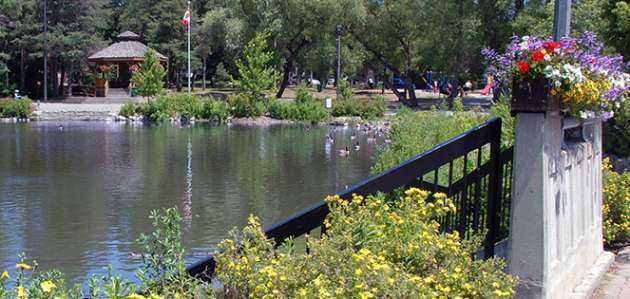
Mill Pond is the part of Richmond Hill where the neighbourhood was here before the city grew up around it. Sixteen acres of pond at the centre. Walking paths around the water that have been there for generations. Bungalows from the 1950s and 60s on streets that pre-date most of the rest of Richmond Hill. The character of the place is not something a developer designed in the last twenty years. It is something the area has held onto while the rest of the city changed around it.
The Q1 2026 average sat at $1,310,941, which puts Mill Pond a meaningful step above the broader Richmond Hill market without crossing into the South Richvale or Bayview Hill price tier. The interesting part of the data used to be the consistency. Sale-to-list held at 98% for three straight quarters through 2025, then slipped to 94% in Q1 2026. That is the first real move in over a year, and it hands buyers negotiating room this neighbourhood has not offered in a long time.
For where Mill Pond fits alongside everything else, see the Richmond Hill Neighbourhoods Guide.
Where is Mill Pond in Richmond Hill?
Mill Pond sits in central Richmond Hill, immediately west of Yonge Street, anchored around the actual pond and Mill Pond Park. Major Mackenzie Drive runs along the northern edge of the neighbourhood. Yonge Street forms the east side. The southern and western edges run through residential streets toward Crosby Avenue and Bathurst Street.
Mill Ponds Trends Over The Last 3 Quarters
| Metric | Q3 2025 | Q4 2025 | Q1 2026 |
|---|---|---|---|
| Sales | 33 | 20 | 17 |
| Average Price | $1,360,061 | $1,563,034 | $1,310,941 |
| Median Price | $1,300,000 | $1,530,000 | $1,370,000 |
| New Listings | 97 | 64 | 63 |
| Active Listings | 64 | 54 | 34 |
| Sale-to-List | 98% | 98% | 94% |
| Avg Days on Market | 33 | 29 | 31 |
| Months of Inventory* | 5.8 | 8.1 | 6.0 |
*Months of inventory = active listings divided by monthly sales rate. Source: TRREB Q3 2025, Q4 2025, and Q1 2026 Community Reports, Mill Pond.
The 94% sale-to-list ratio is the headline number. Mill Pond held at 98% for three straight quarters through 2025 while other pockets swung four or five points, and Q1 2026 finally moved it. Buyers who spent a year meeting sellers within 2% of asking closed 6% under in Q1. One quarter is not a new regime, but it is the first crack in what had been the steadiest price model in Richmond Hill.
The Q4 to Q1 drop in average price ($1.56M to $1.31M) is mostly compositional. Mill Pond sees 17 to 33 sales per quarter, which is thin enough that two or three custom new builds clearing $2M will pull the whole quarter up. Q4 had more new-build closings. Q1 leaned back toward original-stock turnover, and the median ($1.37M) finishing above the average tells you the mix, not the market, did most of the moving.
Days on market held steady, 29 days in Q4 to 31 in Q1. Supply kept tightening too: new listings went from 97 in Q3 to 63 in Q1, and active inventory fell from 54 to 34. The homes that do come to market here still move at a normal pace; there are just fewer of them.
The 6.0 months of inventory reading in Q1 looks buyer-favourable on paper, and for once the 94% sale-to-list points the same direction. Mill Pond is still a thin market with steady supply, and the MOI runs high partly because the sales count is low. SNLR (sales as a percentage of new listings) was 27% in Q1, which leans toward buyers without tipping into a soft market.
What kind of homes does Mill Pond have?
The character of Mill Pond comes from its housing stock more than from any individual home. Original 1950s and 60s detached bungalows are the foundation. Many of them are now being torn down for custom new builds, which is reshaping individual streets year by year while the neighbourhood as a whole holds its character.
Housing types in the area:
- Heritage-era bungalows on 50 to 60 foot lots. Solid bones, original layouts, mechanical systems usually past due.
- Custom rebuilds in the 3,500 to 5,000+ square foot range. Same lot footprint as the bungalow it replaced, but a full modern home.
- A scattering of 1970s and 80s detached homes on the streets further from the pond.
The Q1 numbers ($1.31M average, $1.37M median) reflect this mix. A bungalow due for major work trades in the low-to-mid $1M range. A finished custom build pushes well past $2M. You are pricing the land first and the house second, but the heritage-character premium is real for buyers who want it.
What Schools are Located in the Mill Pond Area?
The catchment runs through the York Region public board, with one Fraser-ranked elementary and two strong secondary options. The secondary anchor is Alexander MacKenzie High School, which hosts the regional Arts MacKenzie program.
That program is one of the most established specialty-arts streams in the GTA, with full curriculum tracks for music, drama, dance, visual arts, and media arts. For families with kids serious about the arts, that catchment is a real differentiator. Langstaff S.S. is the alternate secondary catchment and consistently ranks among the stronger academic schools in York Region.
| Type | Name |
|---|---|
| Elementary | O.M. MacKillop Public School |
| Elementary | Michaelle Jean Public School (French Immersion, currently unranked) |
| Elementary | Beverley Acres Public School (currently unranked) |
| Secondary | Alexander MacKenzie High School |
| Secondary | Langstaff Secondary School |
Catchment lines through Mill Pond are tighter than a quick map check suggests. Two homes on adjacent streets can feed different elementary schools, and the boundary between Alexander MacKenzie and Langstaff cuts through specific blocks. Confirm the catchment for the actual address before you commit.
How Is the Commute From Mill Pond?
Mill Pond's location is a quiet advantage. You are walkable to Yonge Street, you are five minutes by car to Highway 404 via Major Mackenzie, and Richmond Hill GO is on the north edge of the neighbourhood. Most other Richmond Hill pockets give you two of those three. Mill Pond gives you all three.
For drivers, Highway 404 reaches the DVP and downtown Toronto in 35 to 50 minutes off-peak. Rush hour stretches the same drive to 60 to 75 minutes. For transit, Richmond Hill GO runs peak-direction only on weekdays, which is a real limitation for anyone working non-standard hours or commuting in the reverse direction. YRT Viva on Highway 7 covers the local routes year-round.
The Yonge North Subway Extension will not have a station inside Mill Pond, but the terminus at Yonge and Highway 7 sits a few kilometres south. The traffic flow on Yonge Street will change once that opens, and Mill Pond sits close enough to benefit without absorbing the construction impact directly.
For commute detail across the city, see our Richmond Hill community guide.
What It's Like to Live in the Mill Pond Neighbourhood?
The pond is the gravity well. People walk it daily. Kids skate on it through January. Paddle Boats run in July and August. The Mill Pond Music Festival has been held in the park every June for decades.
Mill Pond is also one of the few places in Richmond Hill where you are walking distance from professional theatre, music, and dance. The Richmond Hill Centre for the Performing Arts sits at the southern edge of the neighbourhood on Yonge Street. For families with kids in arts programming, or for buyers who want cultural amenities without driving to downtown Toronto for them, that proximity is worth something.
The streetscape itself is split. Some blocks still look like Richmond Hill in 1970, with mature trees, generous setbacks, and original bungalows owners have held for decades. Other blocks are halfway through their tear-down cycle, with new 4,000 square foot custom homes next to original bungalows on either side. Which version of Mill Pond you get depends on the specific street.
What is not here: a grocery store, a coffee strip, or anything resembling a walkable retail row inside the polygon itself. For weekly errands you drive, either south to Yonge or north to Hillcrest Mall. The walkability in Mill Pond is to the pond, the park, and the Performing Arts Centre. Everything else is a short drive.
What Should You Consider Before Moving to Mill Pond?
The 94% sale-to-list ratio in Q1 2026 reset the negotiating environment. For the first time in over a year there is real room here, roughly in line with what South Richvale and Bayview Hill have been offering buyers. The caveat is sample size: Q1 saw 17 sales, and one strong spring quarter could pull the ratio right back toward 98%. Price the offer off the specific home and its days on market, not off the neighbourhood’s old reputation for full-price sales.
For the full picture, check out our most recent market breakdown for all of Richmond Hill.
A few things to factor in before you commit:
The price is mostly land. A $1.5M bungalow on a 55 foot lot in Mill Pond is essentially a land purchase. The home on it is a depreciating asset. If you plan to live in the original home long term, budget separately for the mechanical and envelope work the home will need.
Renovation vs rebuild is a real decision. A heritage renovation runs $200,000 to $400,000 and keeps the character of the home intact. A full custom rebuild on the same lot is $1.5M to $2.5M+ on top of the lot purchase but produces a new 4,000+ square foot home. Buyers staying 15+ years usually come out ahead rebuilding. Buyers with a 5 to 7 year horizon typically come out ahead renovating, because the rebuild premium does not always show up at resale within that window.
Some blocks have no sidewalks. A few of the older streets were never upgraded. Walk the specific block before you write the offer, particularly if you have small kids.
Retail is a drive. If you need to walk to your groceries and your morning coffee, Mill Pond is not the fit. If a 16-acre pond five minutes from your front door is the right trade, it is.
Inside Tip
Two patterns worth bringing into the conversation before you make an offer in Mill Pond.
The first is the proximity premium to the pond itself. Streets within two blocks of the water (Mill Street, Trench Street, and the surrounding lanes) trade noticeably stronger than streets five or six blocks away in the same polygon.
The premium does not always show up cleanly in a list price comparison, because the further-out streets are often listed by sellers who think they are getting pond proximity pricing. The reality on closing is the gap is real and the further-out blocks come in lower.
The second is the structure-to-land value ratio on the MPAC assessment. Lots where MPAC has the land carrying 70% or more of the total assessed value are essentially tear-down candidates, and they are priced as such.
Lots where the structure is still carrying significant assessed value usually have a renovation that has been done in the last 10 to 15 years, and those homes are not tear-down candidates. Looking at the assessment split before you write the offer tells you what kind of buyer the seller is expecting.
Similar neighbourhoods to consider
Here are a few other Neighbourhoods in Richmond Hill that are worth looking at if you want similar aspects to Mill Pond:
- South Richvale if you like the heritage-meets-custom-rebuild pattern but want bigger lots and ravine backing. Different price tier ($1.83M average in Q1 2026) but 93% sale-to-list there, the loosest in Richmond Hill, gives buyers slightly more leverage than Mill Pond’s 94%.
- Westbrook for similar central Richmond Hill positioning with a newer housing stock and less character to manage. $1.4M average in Q1 2026, though days on market there stretched to 46 versus Mill Pond’s 31, and walkable to Yonge in much the same way.
- Crosby for the same general area south of Mill Pond at a notably lower price point ($931K Q1 2026 average) and a 99% sale-to-list ratio that tells you demand is holding at the entry tier.
Frequently Asked Questions
What is the difference between the Mill Pond and Mill Pond Park?
The Mill Pond is the 16-acre body of water at the centre of the neighbourhood. Mill Pond Park is the surrounding green space with the walking paths, the gazebo, the playground, and the boat launch. The pond is what people skate on in winter and paddleboat on in summer. The park is where the Mill Pond Music Festival is held every June. Locals use both names somewhat interchangeably, but the neighbourhood takes its name from the pond, not the park.
Is Mill Pond walkable to downtown Richmond Hill?
Yes, in the sense that Yonge Street between Major Mackenzie and Crosby is the closest thing Richmond Hill has to a downtown strip, and Mill Pond sits directly adjacent. The Richmond Hill Centre for the Performing Arts is at the southern edge of the neighbourhood. Restaurants and small businesses line that stretch of Yonge. For full grocery shopping and big-box retail, you are still driving. Mill Pond's walkability is to the pond, the park, the Performing Arts Centre, and the Yonge strip, not to a complete weekly errand run.