
By Shawn Zigelstein, Broker, Team Zold
Woodland Hill is Newmarket's newest established neighbourhood, known for its convenience. Upper Canada Mall anchors the southeast corner, while the Woodland Hills shopping plaza along Yonge Street features major retailers and a variety of restaurants and services. Davis Drive commercial corridor borders the south. For those prioritizing daily errands and access to retail, no other Newmarket neighbourhood offers more shopping options so close together.
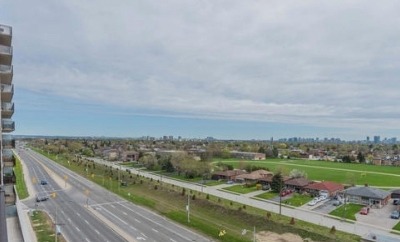
However, the data reveals more than just convenience and newer homes. In Q1 2026, Woodland Hill recorded 19 sales at an average price of $1,093,805, ranking it as Newmarket’s fourth most expensive neighbourhood. With a 97% sale-to-list ratio and an average of 26 days on market—the fastest in the city—homes here are selling more quickly than in Stonehaven-Wyndham, Armitage, or any other area. The combination of newer homes, retail access, and an extensive trail system is driving a market pace that exceeds what the headline price suggests.
For a broader look at how Woodland Hill fits within the rest of Newmarket, take a look at our Newmarket Neighbourhoods Guide.
Where is Woodland Hill Located in Newmarket?
Woodland Hill is located in the northwest quadrant of Newmarket, bordered by Yonge Street to the east, Bathurst Street to the west, Davis Drive to the south, and Green Lane to the north. Faux stone markers on the west side of Yonge Street at Aspenwood Drive indicate the formal entrance to the neighbourhood.
The neighbourhood’s name reflects its setting: Woodland Hill is situated on elevated, hilly terrain with pockets of dense forest throughout the residential streets. The elevation and tree cover create a distinct atmosphere compared to the flatter, more open subdivisions in southeast Newmarket. The varied terrain is noticeable whether driving or walking through the area.
The southeast corner, at Yonge Street and Davis Drive, serves as the commercial hub. Upper Canada Mall anchors one side, while the Woodland Hills shopping plaza anchors the other, offering big-box retail, grocery stores, and a variety of restaurants. Davis Drive provides access to the south via the highway. Residential streets are set back from commercial areas and buffered by hilly terrain and tree cover, ensuring that all daily necessities are within a five-minute drive.
Many buyers are unaware that Woodland Hill features an extensive trail system and green spaces beyond its commercial areas until they visit. Environmental Park offers a nature trail, amphitheatre, and playground within a woodlot and wetlands. The Dave Kerwin Trail runs through the neighbourhood, and Woodland Hill Labyrinth Park provides additional trails, a playground, and picnic areas. Approximately 10 acres of preserved land enhance the community, and homes adjacent to these green spaces command a premium.
What the Data Actually Shows in Woodland Hill
Q1 2026 gave Woodland Hill 19 sales against 69 new listings and 23 active listings. Nineteen sales are a solid sample — enough to see real patterns in the detached and semi-detached segments, though the townhouse data is thin.
Here is what TRREB recorded for Woodland Hill in Q1 2026:
Woodland Hill Market Snapshot — Q1 2026
| Metric | Q1 2026 |
|---|---|
| Sales | 19 |
| Dollar Volume | $20,782,300 |
| Average Price | $1,093,805 |
| Median Price | $1,140,000 |
| New Listings | 69 |
| Active Listings | 23 |
| Sale-to-List Ratio | 97% |
| Avg Days on Market | 26 |
Source: TRREB Community Reports Q1 2026
Woodland Hill Property Type Breakdown — Q1 2026
| Property Type | Sales | Avg Price | Median Price | SP/LP | DOM | SNLR |
|---|---|---|---|---|---|---|
| Detached | 14 | $1,165,000 | $1,163,000 | 97% | 23 | 34% |
| Semi-Detached | 4 | $914,000 | $925,000 | 96% | 28 | 33% |
| Att/Row/Townhouse | 1 | n/r | n/r | n/r | n/r | n/r |
| Condo Townhouse | 0 | n/a | n/a | n/a | n/a | n/a |
| Condo Apt | 0 | n/a | n/a | n/a | n/a | n/a |
Source: TRREB Community Reports Q1 2026
Let's break it down.
Detached homes dominate the market, moving faster than absorption rates suggest. Fourteen of 19 sales (74%) were detached. While the 34% sales-to-new-listings ratio appears low, the 23-day average days on market indicates that well-priced homes sell within three weeks at 97% of the asking price. The gap between the low SNLR and fast DOM reflects excess inventory from overpriced listings, while competitively priced homes move quickly. This is a market defined by pricing discipline, not weakness.
The detached segment’s average and median prices are nearly identical at $1,165,000 and $1,163,000, respectively. This $2,000 difference across 14 sales indicates a tightly clustered market with no significant outliers. Detached homes are consistently priced at around $1.16 million and sold for that amount, providing reliable comparables for buyers and highlighting that overpricing by $50,000 is immediately noticeable to sellers.
The semi-detached segment averaged $914,000, offering buyers a $250,000 discount compared to detached homes. Four semi-detached sales in Q1 recorded an average of $914,000 and a median of $925,000, with a 33% SNLR and 28-day DOM. The 96% sale-to-list ratio, slightly below the detached market, indicates more room for negotiation. For those seeking Woodland Hill’s location and newer homes under $1 million, semi-detached properties are the entry point.
Townhouses saw only one sale in Q1, so TRREB did not report detailed statistics. With 16 new townhouse listings and only one sale, inventory is accumulating. Townhouse buyers in Woodland Hill have ample options and time to make decisions.
The neighbourhood-wide average of 26 days on market is notable. For comparison, Glenway Estates averaged 44 days, Stonehaven-Wyndham 34, Central Newmarket 37, and Armitage 27. Woodland Hill was the fastest-moving market in Newmarket in Q1 2026. The newer housing stock reduces inspection uncertainty, giving buyers confidence and accelerating the sales process.
What Kind of Homes Does Woodland Hill Have?
Woodland Hill is Newmarket’s newest established neighbourhood, with housing stock primarily from the early to mid-2000s through recent construction. Most homes are 15 to 25 years old, meet modern electrical, HVAC, and insulation standards, and benefit from mature landscaping and a settled community atmosphere.
Detached homes typically feature three to four bedrooms, two-car garages, and are built on the hilly terrain characteristic of the neighbourhood. Lot sizes are standard suburban, lacking the larger frontages of Stonehaven-Wyndham or estate lots of Armitage. However, the topography provides unique sight lines and a sense of space not found in flat-lot subdivisions. Homes on higher elevations or adjacent to treed areas offer a premium feel beyond what lot dimensions alone indicate.
Semi-detached homes are a significant part of the housing mix, with some featuring built-in basement units. Certain properties include purpose-built secondary suites with separate entrances as part of the original construction. For buyers seeking rental income or multi-generational living, Woodland Hill is one of the few Newmarket neighbourhoods where secondary suites were included in the builder’s plan, which is important for insurance, legality, and resale value.
Townhouses complete the housing mix, offering a lower price point and are concentrated in specific sections of the neighbourhood. Woodland Hill has no condo or apartment inventory; all housing is ground-level.
The streetscape features sidewalks with street lamps, traffic-calmed roads with bicycle lanes, and hilly terrain that makes walking and cycling more engaging than in flatter areas of Newmarket. Overall, Woodland Hill is a well-maintained, relatively uniform early-2000s
What Schools are in Woodland Hill?
Woodland Hill offers strong, though not top-ranked, school options. Bogart Public School is the primary elementary school, scoring 7.3 out of 10 on the Fraser Institute’s 2025 Report Card and ranking 687th out of 3,021 Ontario elementary schools. This places it in the top quartile, making it a solid public elementary choice. While not as high-profile as Alexander Muir (7.6) in Glenway Estates, it consistently exceeds provincial averages in EQAO assessments.
| Type | Name | Notes |
|---|---|---|
| Elementary | Bogart Public School | YRDSB · Fraser 7.3 · Rank #687 of 3,021 |
| Secondary | Sir William Mulock S.S. | YRDSB · Fraser 6.7 · Rank #276 of 747 · SHSM programs in Business, Health & Wellness, ICT |
| Secondary (Catholic) | Sacred Heart Catholic High School | YCDSB · Fraser 7.2 · Rank #178 |
The secondary school catchment is Sir William Mulock Secondary School, which scores 6.7 out of 10 and ranks 276th in Ontario, above the provincial midpoint. While respectable, it does not match Newmarket High School’s 8.5 rating. For families prioritizing secondary school rankings, Armitage and Stonehaven-Wyndham offer stronger catchments. Catholic families have access to Sacred Heart Catholic High School, which has a score of 7.2 and ranks 178th, making it the highest-scoring secondary option for Woodland Hill residents.
What to Consider Before Buying in Woodland Hill
With a 97% sale-to-list ratio and a $1,165,000 detached average in Q1 2026, buyers typically negotiated about $35,000 off the list price. Given the 23-day average days-on-market, negotiations occur quickly, unlike the 60-day window seen in Glenway Estates. Woodland Hill favours buyers who are pre-approved and have a clear budget.
Buyers often underestimate the following factors in this neighbourhood:
The 34% detached sales-to-new-listings ratio can be misleading without considering days on market. While only a third of new detached listings sold in Q1, the 23-day DOM shows that well-priced homes move quickly. The market is effectively two-tiered: competitively priced homes sell within three weeks, while overpriced listings remain unsold. Buyers should identify which listings are well-priced before making offers, as stale inventory may be more negotiable.
The semi-detached segment serves as the entry point, with some units offering purpose-built basement suites. At an average price of $914,000, these homes provide a sub-million-dollar option with potential rental income. A legal basement unit generating $1,500 to $2,000 per month can significantly offset carrying costs. However, not all semis include this feature—buyers should confirm suite status, legality, and separate entrance before factoring rental income into their offer.
The uniformity of the housing stock is both an advantage and a limitation. Early-2000s construction ensures consistent mechanical systems and predictable maintenance costs, with no outdated wiring or aging furnaces. However, there is less architectural variety than in older neighbourhoods such as Gorham-College Manor or Central Newmarket. Woodland Hill homes generally share similar footprints, exterior finishes, and floor plans. Buyers seeking character may look elsewhere, while those prioritizing predictability and low maintenance risk will find this appealing.
Green space is a key differentiator in Woodland Hill. While often referred to as "the neighbourhood next to the mall," this overlooks its extensive trail and park network, including Environmental Park, the Dave Kerwin Trail, and Woodland Hill Labyrinth Park. Homes adjacent to preserved land command a premium and retain their value due to unique sightlines and privacy. Walking the trails is recommended, as it significantly enhances the neighbourhood’s appeal.
Similar Neighbourhoods to Consider
- Glenway Estates is for buyers seeking similar shopping convenience, a wider price range, and access to a transit hub. Glenway ran an average of $1,013,273 in Q1 2026 across 11 sales, with a 97% SP/LP and 44 days on market. The key differences: Glenway has the Newmarket Bus Terminal within its boundaries for better transit, a wider range of housing types from condo townhouses in the low $500s to detached homes above $1.1 million, and older housing stock spanning the 1960s through new construction. The trade-off is a slower-moving market — 44-day DOM versus Woodland Hill's 26 — and the mechanical maintenance questions that come with older homes.
- Summerhill Estates for buyers who want the most affordable entry into a mid-2000s Newmarket neighbourhood. Summerhill averaged $973,875 in Q1 with 18 sales and a 97% SP/LP at 31 days on market. Like Woodland Hill, much of the housing stock dates to the early 2000s, with similar build quality and streetscapes. The difference is roughly $120,000 below the neighbourhood average, and the southern section is still being built out, with the historic Mulock Farm parkland as the anchor amenity. If Woodland Hill's price point is a stretch, Summerhill offers a similar product at a lower entry.
- Stonehaven-Wyndham for buyers who want to move up from the Woodland Hill price bracket into Newmarket's premium southeastern pocket. Stonehaven-Wyndham averaged $1,299,170 in Q1 at 98% SP/LP and 34 days on market. The upgrade is the Newmarket High School catchment at Fraser 8.5, the highest-scoring public secondary in Newmarket. You're paying roughly $135,000 more than Woodland Hill's detached average for a stronger school catchment, larger lots, and the southeastern recreation corridor — but the homes are 1980s–90s construction, so you're buying older housing stock at a higher price. The question is whether the school premium justifies the trade-off.
Woodland Hill — Where the Market Goes From Here
The Q1 2026 data for Woodland Hill shows a market moving faster than any other neighbourhood in Newmarket, yet absorption numbers suggest that pricing discipline is the difference between selling in three weeks and sitting for months.
Here's my read. The 26-day DOM and 97% SP/LP are not going to last through the spring if listing inventory continues to build at the rate Q1 showed — 69 new listings against 19 sales is a 28% SNLR, which means supply is outpacing demand. If that ratio holds into Q2 and Q3, expect the DOM to stretch and the SP/LP to drift toward 96%. The homes that continue to sell quickly will be the ones priced right at the $1.15 to $1.17 million detached band, where Q1 transactions actually closed. The ones priced $50,000 above that band will sit.
For detached buyers, the current window is solid. You have enough inventory to choose from, the negotiating room is real at 97% SP/LP, and the housing stock is new enough that your inspection risk is low. The combination of convenience, newer construction, and the trail system is a package that holds its appeal regardless of where rates go. This isn't a speculative buy. It's a lifestyle buy in which the fundamentals — location, housing quality, access to amenities — are durable.
For semi-detached buyers, the $914,000 entry point with potential rental income from a basement unit is one of the more practical trades in Newmarket. If rates come down further, expect that segment to tighten before the detached segment does, because affordability-driven demand hits the lower price points first.
For townhouse buyers, Q1 2026 was your window. Whether that supply-demand imbalance persists into the spring is the question to watch.
For the most recent market news in Newmarket, check out our latest Newmarket Market Update post.